
Call For a Consultation (305) 373-4400
Federal Appeals Lawyer
Experienced Federal Appeals Attorney in Miami, FL
A Federal Appeals Lawyer Who Knows How Convictions Get Reviewed, Not Retried
A federal appeal does not give you a new trial. The U.S. Court of Appeals for the Eleventh Circuit looks at whether the district court applied the law correctly, not whether a jury should have reached a different verdict. That distinction catches many people off guard after a conviction or a sentence they believe was wrong. A skilled Federal Appeals Lawyer can examine the trial record and identify legal issues that may be raised on appeal.
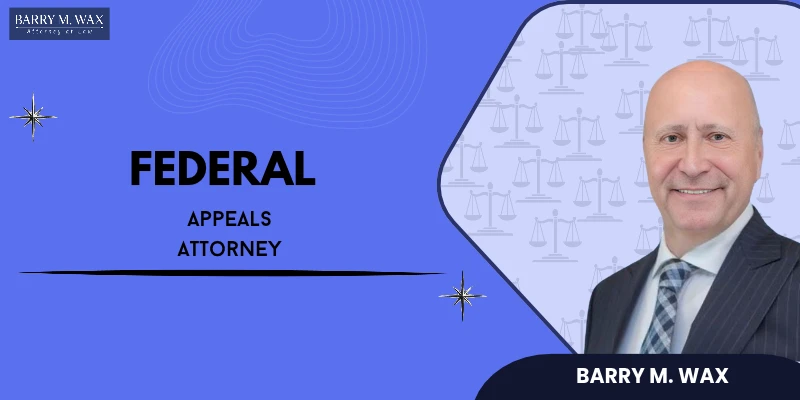
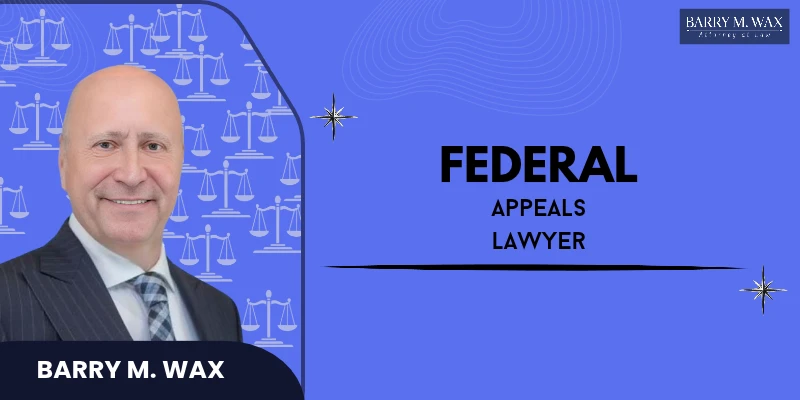
We know how unsettling it feels to learn the case does not simply start over. An experienced Miami federal criminal defense attorney can explain what the appellate court will actually review. At the Law Offices of Barry M. Wax, clients work directly with an attorney who has practiced criminal defense since 1985.
Attorney Barry M. Wax is admitted to the U.S. Court of Appeals for the Eleventh Circuit. He is also admitted to the U.S. District Courts for the Southern and Middle Districts of Florida, where many of the federal cases he handles begin.
Reach out to talk through what happened in your case and what an appeal could realistically do for you.
Types of Federal Appeals We Handle for Florida Clients
Federal appellate and post-conviction matters cover more than a direct challenge to a guilty verdict. Each procedure follows its own rules concerning what the court can consider, which deadlines apply, and how much deference the reviewing court gives the trial judge.
The federal appellate and post-conviction matters the Law Offices of Barry M. Wax handles include:
- Direct appeals of federal convictions to the U.S. Court of Appeals for the Eleventh Circuit
- Appeals challenging how a federal sentence was calculated under the sentencing guidelines
- Appeals from orders denying motions to suppress evidence obtained through a search or interrogation
- Post-conviction motions seeking to vacate, set aside, or correct a conviction or sentence because of a constitutional problem, including ineffective assistance of counsel
- Appeals involving asset-forfeiture orders connected to federal criminal cases
- Appeals from orders denying compassionate release or another qualifying request for a reduced sentence
A direct appeal, a post-conviction motion, and a compassionate-release request are different proceedings. Each moves on its own timeline and applies a different legal standard.
The court’s standard of review may depend on whether the issue concerns a legal ruling, factual finding, evidentiary decision, or discretionary sentencing determination. Identifying the correct standard affects how the appellate argument must be framed.
What You Risk If You Miss a Federal Appeal Deadline
Federal appeal deadlines require immediate attention. Under Rule 4(b) of the Federal Rules of Appellate Procedure, a defendant in a federal criminal case generally must file a notice of appeal in the district court within 14 days after the later of the entry of the judgment or order being appealed or the government’s filing of a notice of appeal.
The district court may grant a limited extension of no more than 30 days after the original deadline upon a finding of excusable neglect or good cause. That relief is not automatic, so a defendant should not assume that a late notice will be accepted.
The notice is filed in the district court, not directly with the Eleventh Circuit. Missing the applicable deadline can prevent the appellate court from reviewing the issues a defendant hoped to raise.
The court of appeals generally reviews final decisions of federal district courts under 28 U.S.C. § 1291. A ruling entered in the middle of a case usually must wait until a final judgment unless a specific exception permits an interlocutory appeal.
Once an appeal is properly filed, the Eleventh Circuit reviews legal questions without deferring to the trial court’s legal conclusions. Other issues, including factual findings and discretionary rulings, may receive more deferential review.
Knowing which standard applies to each argument shapes how the appeal is researched, written, and presented.
Federal Sentencing Appeals and Post-Conviction Options
A federal sentencing appeal may challenge the way the district court calculated the advisory sentencing-guideline range, applied an enhancement, resolved an objection, or evaluated the statutory sentencing factors.
A knowledgeable Miami federal sentencing attorney can review the judgment, sentencing transcript, presentence investigation report, written objections, and guideline calculations to identify issues that may have affected the sentence.
Not every issue belongs in a direct appeal. Claims involving ineffective assistance of counsel often depend on facts outside the existing trial record. Those claims may be addressed through a motion under 28 U.S.C. § 2255 rather than through the direct appeal itself.
A § 2255 motion generally carries a one-year limitations period, but the date on which that period begins depends on the circumstances identified in the statute. The deadline should be calculated from the specific procedural history of the case rather than assumed.
Direct appeals and post-conviction motions also differ in the relief they can provide. Depending on the issue and the court’s ruling, potential outcomes may include affirmance, reversal, resentencing, a new proceeding, or another order addressing the identified legal error. No particular outcome is guaranteed.
Appeals Involving Suppression and Forfeiture Orders
Some appeals focus on evidence admitted after the district court denied a motion to suppress. The appellate court may review whether investigators violated the Fourth Amendment, whether a warrant was supported by probable cause, or whether statements were obtained in violation of constitutional protections.
The appeal is ordinarily limited to the record created in the district court. The written motion, evidence presented at the suppression hearing, factual findings, and legal objections can determine what remains available for appellate review.
Federal appeals may also involve property connected to a criminal prosecution. A strategic Miami federal forfeiture attorney can examine whether the government established the required connection between the property and the alleged offense and whether the proper procedures were followed.
Preserving objections in the district court matters. When an issue was not properly raised below, the appellate court may apply a more demanding standard of review.
What the Law Offices of Barry M. Wax Brings to a Federal Appeal
Barry M. Wax began his legal career as an Assistant Public Defender in Miami-Dade County from 1985 to 1987 before entering private practice. That trial-level grounding matters on appeal because identifying a potentially reversible error requires understanding what should have happened in the district court.
He has practiced criminal defense since 1985 and is admitted to the U.S. Court of Appeals for the Eleventh Circuit, the U.S. District Courts for the Southern and Middle Districts of Florida, and other federal courts.
Barry M. Wax has been selected to Super Lawyers for White Collar Criminal Defense in Florida. He also holds an AV Preeminent rating from Martindale-Hubbell, the organization’s highest peer-review rating for legal ability and ethical standards.
Credentials do not replace a close review of the record. Appellate representation requires examining the judgment, transcripts, motions, exhibits, objections, jury instructions, sentencing materials, and other documents that may affect which arguments remain available.
How an Appeal Moves From the Southern District of Florida to Atlanta
Federal criminal cases in Miami may be heard at the Wilkie D. Ferguson Jr. U.S. Courthouse, part of the U.S. District Court for the Southern District of Florida. The district also maintains divisions in Fort Lauderdale, West Palm Beach, Fort Pierce, and Key West.
An appeal from a qualifying final judgment or order entered by the Southern District of Florida goes to the U.S. Court of Appeals for the Eleventh Circuit.
The Eleventh Circuit is based at the Elbert P. Tuttle U.S. Court of Appeals Building in Atlanta, Georgia. The case does not restart there. The appellate court works from the record created in the district court, written briefs submitted by the parties, and oral argument when the court determines that argument is appropriate.
How the trial record was developed—including which objections were raised, how the judge ruled, and whether the issues were preserved—often determines which arguments can be presented on appeal.
FAQs About Federal Appeals in Miami, FL
What happens if I miss the deadline to file a federal appeal?
Missing the 14-day deadline can prevent a direct appeal from moving forward. A district court may grant a limited extension upon a finding of excusable neglect or good cause, but that relief is not automatic and cannot be assumed. A separate post-conviction motion may sometimes provide another avenue for raising qualifying issues, although it follows different rules and deadlines.
Will I stay out of custody while my federal appeal is pending?
Not automatically. Remaining out of custody during an appeal generally requires a separate request and satisfaction of the applicable federal requirements. The court may consider whether the appeal raises a substantial legal or factual question, whether the defendant presents a flight risk, and whether the defendant poses a danger to another person or the community.
Can I introduce new evidence during a federal appeal?
Generally, no. The Eleventh Circuit ordinarily reviews the record developed in the district court, including transcripts, exhibits, motions, and rulings. New evidence may need to be raised through a separate post-conviction procedure, depending on the nature of the evidence and the case’s procedural history.
How long does a federal appeal usually take to resolve?
The timeline varies. Preparing the record, obtaining transcripts, completing briefing, scheduling any oral argument, and waiting for a decision can take many months or longer. Cases involving lengthy trials, extensive records, or multiple defendants may require additional time.
If my case was tried in Fort Lauderdale or West Palm Beach, does the appeal still go to the Eleventh Circuit?
Yes. Fort Lauderdale, West Palm Beach, Fort Pierce, Miami, and Key West are divisions of the U.S. District Court for the Southern District of Florida. Appeals from qualifying judgments and orders entered in those divisions go to the U.S. Court of Appeals for the Eleventh Circuit.
How much does it cost to file a federal appeal?
The current fee for filing and docketing a notice of appeal is $605. That amount does not include transcript expenses or attorney’s fees for reviewing the record, researching the issues, preparing briefs, and presenting oral argument when applicable. Court fees can change, so the amount should be confirmed when the notice is filed.
Start the Conversation With a Federal Appeals Lawyer Before Time Runs Out
Federal appeal deadlines move quickly, and the decision to appeal often must be made within days of the entry of judgment. The right path—whether that means a direct appeal, a post-conviction motion, or both—depends on what the district-court record shows and which issues were preserved.
The Law Offices of Barry M. Wax can review the record and explain what a realistic federal appeal may involve. Contact the Law Offices of Barry M. Wax to discuss your federal appeal, applicable deadline, and available options.
Areas We Serve in Miami and South Florida
The Law Offices of Barry M. Wax represents clients in Miami, Florida, and throughout Miami-Dade County in federal criminal appeals and related post-conviction matters.
The firm also assists clients whose federal cases originated in Fort Lauderdale, West Palm Beach, Fort Pierce, Key West, and other communities within the Southern District of Florida. Barry M. Wax’s federal practice includes matters involving convictions, sentencing disputes, suppression rulings, forfeiture orders, and constitutional claims.
Because appellate deadlines can begin running immediately after entry of the judgment or appealable order, clients throughout South Florida should seek guidance promptly. The firm can review the procedural history and explain whether a direct appeal, post-conviction motion, or another form of relief may apply.
Miami, FL Federal Appeals Law Additional Resources:
- How to Respond When Served With a Grand Jury Subpoena
- What Is a Target Letter From a Prosecutor, and Should I Be Worried?
- What to Do if You’re Under Federal Criminal Investigation in Florida
- Why Early Legal Representation Matters in Federal Investigations
- Federal Sentencing Guideline Amendments
Visit the Law Offices of Barry M. Wax
Copyright © 2026 Law Offices of Barry M. Wax. All rights reserved.
Digital Marketing By 
*Images are obtained under license from Canva and other third-party stock image providers, with attribution included where required.