
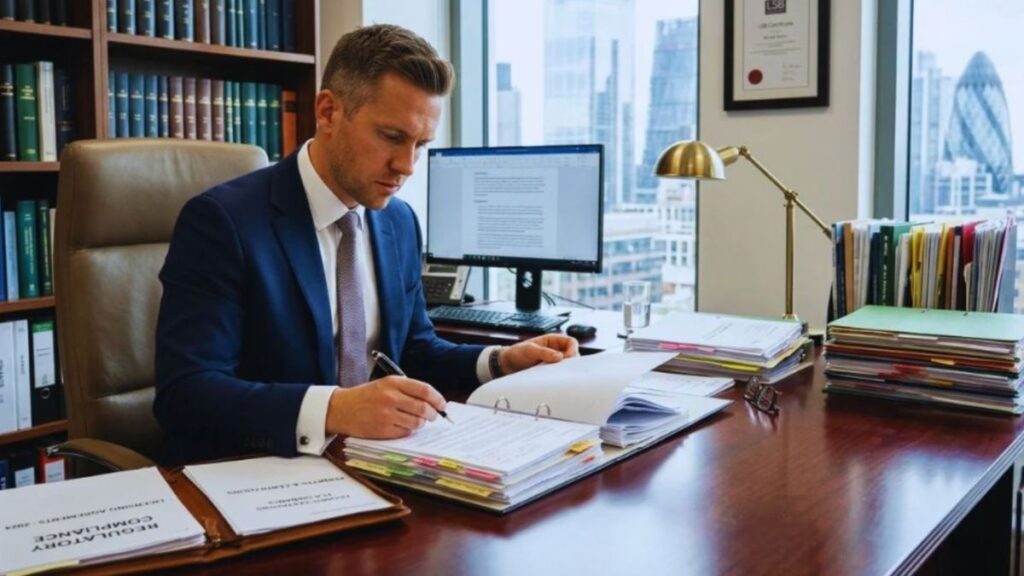
I Received a DBPR Administrative Complaint. What Should I Do First?
If you received a DBPR administrative complaint, check your response deadline immediately. You generally have 21 days after receiving the complaint to submit an Election of Rights. Missing this deadline may waive your right to a hearing and result in disciplinary action against your professional license.
Take these steps before responding:
- Identify the notice. An investigation letter requests information, while a formal administrative complaint outlines disciplinary allegations and your response options.
- Check the deadline. Confirm when you received the complaint and review the Election of Rights instructions. Your response generally must reach DBPR within 21 days.
- Review your hearing options. A formal hearing addresses disputed material facts, while an informal hearing generally applies when the facts are not disputed.
- Preserve your records. Keep relevant emails, contracts, licensing documents, and other evidence. Do not alter or destroy records.
- Consult an attorney before making admissions. Statements to DBPR may affect your licensing defense and potentially related criminal proceedings.
Criminal Defense Practice Since 1985. Direct Attorney Attention. Coordinated Regulatory and Criminal Defense.
Barry M. Wax has practiced criminal defense since 1985. His work includes serious criminal matters that may also create professional licensing consequences. When regulatory allegations and criminal investigations arise from the same facts, responses in one proceeding can affect the other.
The firm emphasizes direct attorney involvement, careful review of the evidence, and practical guidance about the available administrative and criminal defense options.
What Is Professional License Defense in Florida?
Professional license defense covers every stage of a regulatory case against a licensed professional. That includes the initial complaint, the investigation, the probable cause review, settlement talks, and a formal or informal hearing. The goal is to keep your license active and your record as clean as possible.
These cases are administrative, not criminal. DBPR and Department of Health disciplinary cases are governed by Florida’s Administrative Procedure Act (Chapter 120, Florida Statutes), the applicable regulatory statutes, and your profession’s practice act and rules. Attorney discipline follows a separate process through The Florida Bar and the Florida Supreme Court. The penalties are different from a criminal case, but for many professionals they hit harder. A criminal fine ends. A revoked license can end a career.
Why Licensing Boards Move Quickly
Licensing boards exist to protect the public, and they treat that mission as urgent. Once a complaint is filed, an investigator may contact you within weeks. After you are served with an administrative complaint, you typically have only 21 days to file an Election of Rights choosing how to proceed. Check the accompanying notice for the applicable deadline and filing instructions. Missing that deadline can result in a default and a final order entered against you without a hearing.
If the agency finds that an immediate serious danger to public health, safety, or welfare requires emergency action, it may issue an emergency suspension order before a hearing, subject to statutory requirements. Early action gives your lawyer time to answer the complaint, gather records, and in some cases seek dismissal before the matter becomes public, where the applicable confidentiality rules allow.
The Difference Between Criminal Charges and Licensing Violations
A criminal case is brought by a prosecutor in court. The state must prove guilt beyond a reasonable doubt, and penalties include jail, probation, and fines. A regulatory agency brings a licensing case before a board or an administrative law judge. In Florida, the agency must prove a disciplinary violation by clear and convincing evidence, and penalties include reprimands, fines, probation, suspension, and revocation.
The two can overlap. A criminal arrest may trigger a duty to report to your board. A conviction or plea, even a withheld adjudication, can become its own ground for discipline. Decisions made in one case can directly affect the other, which is why the strategy has to account for both.
Common Florida Licensing Complaints and Disciplinary Allegations We Defend Against
Licensing complaints come from clients, patients, competitors, former employees, insurers, and the agencies themselves. Some are serious. Others involve misunderstandings, incomplete records, or business disputes that raise regulatory questions.
Unlicensed Contractor Allegations
Florida takes unlicensed contracting seriously. Under Section 489.127, Florida Statutes, performing or offering contracting work without the required license is a first-degree misdemeanor for a first offense. The offense is a third-degree felony if the unlicensed person was previously found guilty of such a violation or commits the violation while a state of emergency declared by executive order of the Governor is in effect. DBPR can also impose administrative fines for unlicensed activity, separate from any criminal penalty.
Contractor licensing issues can arise from situations such as:
- A licensed specialty contractor performing work outside the scope of the license
- A business continuing to operate after its only qualifying agent leaves, without meeting applicable replacement or temporary-operation requirements
- Advertising contracting services without holding the required license
- Performing work that requires a license for a friend or neighbor without holding that license
- A homeowner complaint after a payment disagreement that prompts a licensing investigation
A licensed contractor’s failure to include a required license number in advertising is a separate compliance issue and does not, by itself, establish unlicensed contracting.
When Unlicensed Contracting Triggers Both Criminal and DBPR Proceedings
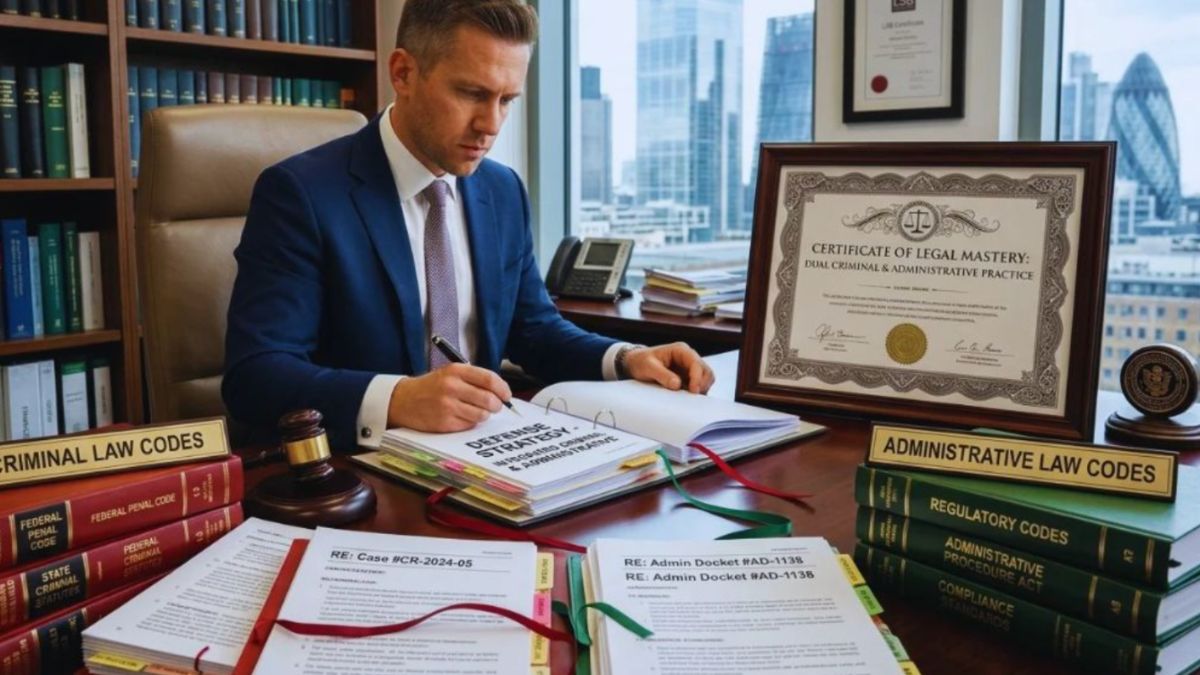
An unlicensed contractor allegation can lead to criminal and administrative cases running at the same time. Treating it as only a criminal matter, or only a licensing matter, can leave you exposed on the other side.
Criminal Penalties and Related Allegations
The criminal case is prosecuted by the State Attorney’s Office. Depending on the facts, you may face a misdemeanor or felony charge, along with possible restitution to the property owner. Prosecutors may also add related charges, such as theft or fraud, when a customer claims money was paid for work that was not completed. A conviction carries a permanent record that can affect future licensing applications, bonding, and insurance.
The Licensing Component
At the same time, DBPR may open its own investigation. If you hold another professional license, the alleged conduct or outcome of the criminal case may also support discipline under that profession’s statutes and rules. If you are unlicensed and hope to apply for a license later, an administrative finding or criminal record can complicate that application for years.
Why Coordinated Criminal and Licensing Defense Matters
Prosecutors can use statements made to a DBPR investigator. A guilty or no-contest plea, even with adjudication withheld, can create a separate ground for discipline under the laws governing your profession. A settlement with the agency may include admissions that hurt you in the criminal case. A coordinated defense looks at both proceedings together, controls what you say and when, and aims for resolutions that protect you on both fronts. Barry M. Wax is a criminal defense lawyer first, which matters when the licensing case and the criminal case are built on the same facts.
How Barry M. Wax Approaches a Florida Licensing Defense Case
Every case is different, but most follow a similar path. Here is what to expect when you work with the firm.
Initial Case Assessment
We start by reviewing the notice, the complaint, and any deadlines. We identify which agency and board are involved, what statutes and rules you are accused of violating, and whether there is a related criminal investigation. You will get a clear explanation of the possible outcomes and what the next 30 days look like.
Regulatory Investigation and Discovery
During the investigation phase, we communicate with the investigator on your behalf, prepare any written response, and gather records that support your side, including contracts, invoices, permits, patient records, and communications. We request the agency’s investigative file when it becomes available, submit any appropriate response before probable cause is determined, and use discovery in formal proceedings to test the evidence against you.
Board Representation and Negotiation
Many licensing cases end in negotiation. We can present your side to the probable cause panel, seek a dismissal or a letter of guidance, or negotiate a settlement stipulation with reduced penalties. When a settlement makes sense, we focus on terms that keep you working and limit lasting public discipline.
Hearing Preparation and Defense
If the facts are disputed, you can request a formal hearing before an administrative law judge at the Division of Administrative Hearings. We prepare witnesses and exhibits, challenge the agency’s evidence, cross-examine its witnesses, and hold the agency to its burden of clear and convincing proof. If the facts are not disputed, an informal hearing before the board may be the better route to argue for a lighter penalty.
Why Professionals Facing Licensing and Criminal Allegations Contact Barry M. Wax
Choosing a lawyer for professional license defense means choosing someone who understands the agency, the board, and what is at stake for you personally.
Experience Defending Across Multiple Professions
Barry M. Wax has practiced criminal defense in Florida state and federal courts since 1985. His practice includes healthcare and Medicare fraud, pharmaceutical fraud, white-collar crime, and unlicensed contractor cases, all areas where criminal exposure and professional licensing often collide.
Understanding Licensing Board Procedures
Administrative cases have their own rules, deadlines, and standards of proof. The firm understands how Chapter 120 hearings work, how probable cause panels evaluate complaints, and how disciplinary guidelines shape penalties. That knowledge helps identify procedural defenses and realistic settlement terms early.
Protecting Your Professional Reputation
Licensing discipline is public, and it follows you to future employers, insurers, and license applications in other states. As a small firm, the Law Offices of Barry M. Wax gives each client direct, personal attention from the attorney handling the case. The focus is on resolving the matter quietly whenever possible and on protecting the reputation you have spent years building.
Facing a Florida Licensing Complaint? Discuss Your Legal Options
Your professional license represents years of education, training, and hard work, and licensing boards can threaten it with surprising speed. Effective professional license defense starts early, answers the complaint on your terms, and accounts for any criminal exposure that comes with it. Barry M. Wax brings four decades of courtroom experience to professionals facing disciplinary complaints, regulatory violations, and unlicensed contractor allegations. He understands both the regulatory framework and the personal stakes, and he works to challenge unfounded charges and pursue a favorable resolution. Don’t face a licensing board alone. Contact the Law Offices of Barry M. Wax today for a confidential consultation. If your professional license is under threat, time is critical.